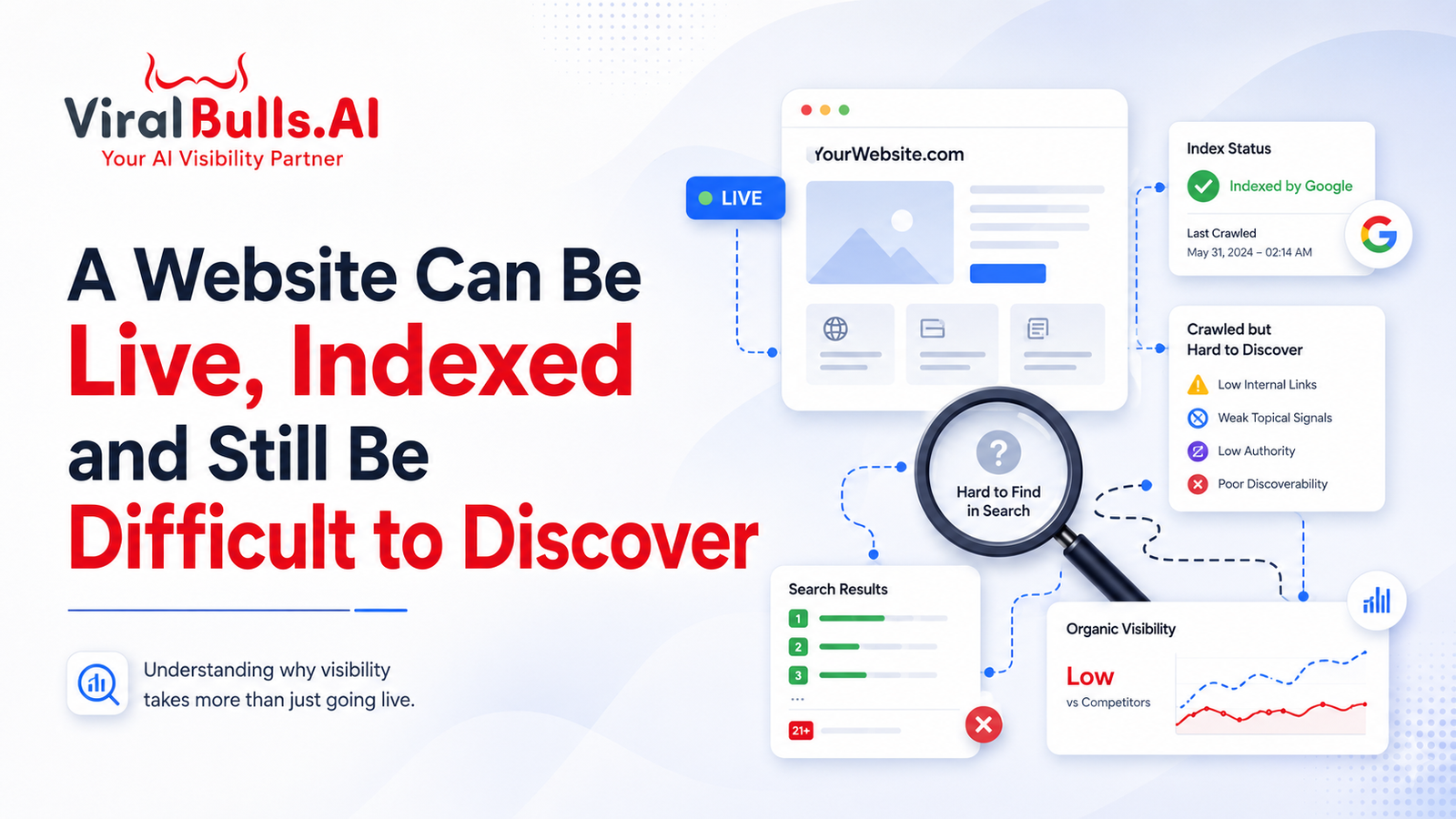
Your pages exist. Google can find the domain. The website looks professional. Yet important queries bring little traffic, and AI-generated answers rarely mention the brand.
The problem may not be one missing keyword. Search systems need to access the site, understand its meaning, evaluate its quality, and connect the brand to the topics it claims to serve.
That is why being ready for Google Search and AI search requires more than publishing pages. It requires a clear technical foundation, useful content, strong entity signals, credible evidence, and a structure that helps both people and machines understand the business.
Google Search and AI Search Are Connected, Not Separate Worlds
Google has stated that its generative AI search features are rooted in its core ranking and quality systems. The same fundamentals that support organic search visibility remain important: crawlable pages, clear structure, unique value, reliable information, and good user experience.
Generative Engine Optimization adds a useful planning lens because AI answer experiences often synthesize information rather than display a simple ordered list. But businesses should not abandon SEO foundations or chase unsupported AI-search hacks.
The goal is to build a site that deserves to be discovered, understood, and referenced across different search experiences.
“A search-ready website is not a checklist item. It’s a system — technical accessibility, clear purpose, topic depth, credible evidence, consistent identity, and useful experience, all working together.”
The 8-Part Website Readiness Framework
Search readiness isn’t one fix — it’s eight layers working together. Here’s what each one covers.
Search Engines Must Be Able to Access the Site
Readiness begins with crawlability and indexability. Important pages should not be accidentally blocked by robots rules, noindex directives, broken navigation, login requirements, or rendering problems.
A logical site architecture helps crawlers and users move from general topics to specific services, products, industries, and evidence. XML sitemaps can assist discovery, but they do not repair weak internal linking or duplicate page structures. Technical SEO should also address canonicalization, redirects, mobile usability, page performance, secure delivery, and status-code errors.
Every Page Needs a Clear Purpose
A page should answer a defined user need. When several pages target the same intent with minor wording changes, the site becomes repetitive and confusing.
Strong pages explain the topic directly, cover the decision factors a reader needs, and connect to the next useful action. Service pages should not be generic lists of benefits — they should clarify scope, process, fit, proof, and expected outcomes. AI SEO services should improve the usefulness and organization of the content, not merely increase the number of pages.
The Website Must Establish Topical Depth
A company cannot build authority around a service through one landing page. Search readiness improves when the site covers the wider decision journey: definitions, comparisons, use cases, problems, implementation, costs, risks, and examples. Internal links should connect this knowledge logically.
For an AI marketing company, that may mean building connected content around AI SEO, Generative Engine Optimization, AI advertising, automation, AI UGC, AI websites, and measurement — rather than publishing unrelated trend articles.
Entity and Brand Information Must Be Consistent
Search systems need to understand who the business is, what it offers, where it operates, and how it relates to other known entities. Use consistent company names, service descriptions, contact details, author information, and social profiles.
An informative About page, leadership profiles, case studies, policies, and clear contact information strengthen transparency. External signals matter too — genuine coverage, reviews, partner mentions, and citations reinforce what the website claims. Manufactured mentions and low-quality placements do not create durable trust.
Structured Data Should Clarify, Not Decorate
Structured data is a standardized way to provide explicit information about page content. It can help Google understand entities such as organizations, products, articles, events, and local businesses.
Markup must match the visible page and follow the relevant guidelines. Adding every possible schema type or hiding information in markup does not make a page more useful. Validate eligible markup, monitor errors, and treat structured data as one part of a wider search strategy.
Content Needs Evidence and Original Value
AI search systems can summarize widely repeated information without relying on another generic article. Brands improve their chances of standing out when they contribute something distinctive — first-party data, case studies, expert analysis, frameworks, implementation lessons, product comparisons, or clear examples.
AI-assisted content can support research and structure, but scaled pages that add little value create quality and spam risks. Human review, factual verification, and brand expertise remain essential.
The Site Should Support Real User Experience
Search readiness is not only a crawler checklist. Pages must load reliably, work on mobile devices, use readable text, provide clear navigation, and avoid intrusive interruptions.
Calls to action should match intent — a person reading an introductory guide may need another educational resource, while a visitor on a service page may need a consultation or pricing discussion. A website that earns clicks but creates confusion will struggle to convert search visibility into business value.
Measurement Must Go Beyond Rankings
Rankings remain useful, but they are not the complete picture. Monitor impressions, clicks, qualified enquiries, assisted conversions, branded searches, engagement with key pages, and visibility across generative search features where reporting is available.
Google introduced dedicated Search Console views for visibility from generative AI features in 2026. This creates a clearer measurement layer for site owners, but reporting should still connect search visibility to leads and revenue — GEO should be measured as part of an integrated search program, not as an isolated vanity metric.
How ViralBulls Prepares Websites
Built On Fundamentals, Not Shortcuts
ViralBulls combines technical SEO, content architecture, entity clarity, authority development, conversion strategy, and AI-search readiness. Our AI SEO services begin with a diagnosis of what prevents the website from being accessed, understood, trusted, or selected — we then prioritize the changes most likely to improve both discovery and business outcomes.
We do not rely on special AI files, artificial mention campaigns, or keyword stuffing. The strategy is built around strong search fundamentals and content that provides genuine value.
Final Thought: Readiness Is a System, Not a Plugin
No single tool, schema block, or optimization guarantees visibility in Google or AI answers. A search-ready website combines technical accessibility, clear purpose, topic depth, credible evidence, consistent identity, and useful user experience.
Businesses that build these foundations will be better prepared as search interfaces continue to evolve.
Website Readiness Checklist
A quick reference for where a site typically stands, and where it usually breaks down.
| Layer | What Good Looks Like | Common Failure |
|---|---|---|
| Technical | Important pages are crawlable, indexable, fast, and stable | Blocked pages, duplicate URLs, broken rendering |
| Content | Pages answer clear intents with original value | Thin, repetitive, keyword-led content |
| Structure | Logical navigation and internal linking | Orphan pages and disconnected blogs |
| Entity Signals | Consistent business and author information | Conflicting names, services, or locations |
| Evidence | Case studies, expertise, data, transparent claims | Unsupported superlatives and generic promises |
| Measurement | Visibility connected to leads and revenue | Rank tracking without business context |
Common Mistakes That Create False Readiness
Some businesses believe a high audit score means the website is search-ready. Automated tools are useful for detecting technical issues, but they cannot judge whether the content provides original value, whether the service positioning is clear, or whether customers trust the claims.
Another mistake is publishing large numbers of near-duplicate location or service pages. More URLs do not automatically create more visibility — each page needs a legitimate purpose and enough unique information to satisfy the intended search.
Businesses also over-focus on mentions in AI tools without improving the underlying website. Sustainable visibility begins with information that can be accessed, verified, and connected to the brand. Search readiness is built through consistent quality, not one-off optimization tricks.