
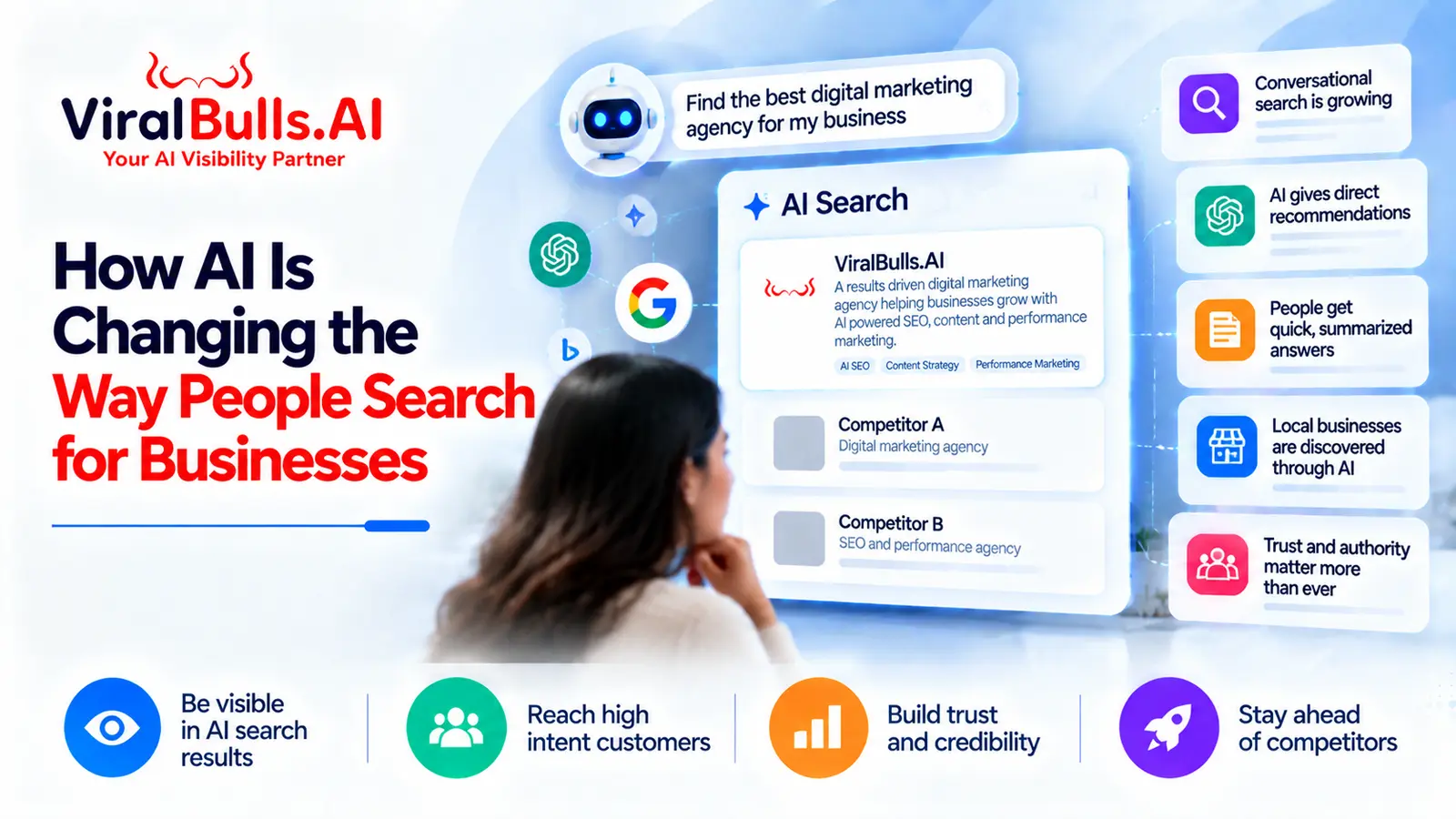
Picture this: you’re standing outside a restaurant you’ve never visited, in a neighborhood you don’t know well, and instead of typing a search query and scrolling through ten blue links, you simply ask, “Find me a quiet place nearby with good vegetarian options and outdoor seating,” and within seconds, you have a curated answer not a list of possibilities, but an actual recommendation. That’s not a glimpse of the future. That’s happening right now.
The way people search for businesses is undergoing its biggest transformation since the invention of the search engine itself. Artificial intelligence has quietly rewired how we discover, evaluate, and choose everything from coffee shops to contractors, and if you run a business, understand marketing, or are simply curious about where digital behavior is headed, this shift affects you directly.
From Search Engines to Search Companions
For nearly two decades, “searching for a business” meant one thing: typing a few keywords into a search bar and sifting through a page of links, ads, and map listings. It worked, but it put the burden of filtering on the user. You had to read reviews, compare websites, and figure out which result actually answered your question.
AI-powered search flips that model. Instead of returning a list of possibilities, conversational AI tools and AI-enhanced search engines interpret intent and deliver a direct, synthesized answer. Ask for “an affordable dentist open on weekends near downtown,” and the response isn’t ten links; it’s a short, ranked shortlist with the exact details you asked for already pulled out.
This is the difference between a search engine and a search companion: one hands you a haystack, the other hands you the needle.
Why This Shift Is Happening Now
Several forces are converging at once:
- Large language models can now understand nuanced, conversational queries instead of relying on rigid keyword matching.
- Voice search and smart assistants have normalized speaking naturally to a device, rather than typing fragmented search terms.
- Consumers increasingly expect instant, personalized answers rather than a research project every time they need a local service.
- Search platforms themselves — Google, Bing, and a wave of AI-native tools — have built generative summaries directly into results pages.
Together, these changes mean that being “findable” today requires far more than ranking on a results page. It requires being understandable to an AI system that is making judgments on a user’s behalf.
How AI Is Reshaping the Discovery Journey
1. Hyper-Personalized Recommendations
AI systems learn from past behavior, location, preferences, and even the tone of a query to tailor results to the individual, not just the search term. Two people typing the same phrase in the same city might see meaningfully different recommendations based on what the AI has learned about their habits and priorities.
2. Conversational, Multi-Step Search
Search is no longer a single query — it’s a dialogue. Users refine their needs in real time (“actually, somewhere cheaper,” or “does it have parking?”), and AI tools carry that context forward. Businesses that provide clear, structured information online are far more likely to survive this back-and-forth filtering process.
3. Trust Signals Are Being Reinterpreted
AI models increasingly weigh the substance of reviews, not just star ratings — reading sentiment, recurring themes, and recency to judge quality. A business with fewer but detailed, authentic reviews can now outrank one with hundreds of generic five-star ratings.
4. Visual and Voice Search Are Growing Fast
Snap a photo of a product you like, and AI can find local retailers that sell something similar. Ask a smart speaker for “a mechanic open right now,” and it filters by real-time hours and proximity automatically. These modalities are becoming everyday habits, not novelties.
What This Means for Businesses
This shift isn’t just a technical curiosity; it’s a competitive reality. Consider what it means in practice:
- Clarity beats keyword-stuffing. AI models reward businesses that describe themselves in plain, accurate, well-structured language across their website, listings, and profiles.
- Consistency across platforms matters more than ever, since AI systems cross-reference data from multiple sources to build a confident answer.
- Genuine customer feedback carries new weight, as sentiment analysis increasingly shapes which businesses get recommended.
- Being “AI-visible” is becoming as important as being “search-engine optimized” — the two are converging into one discipline.
The businesses thriving in this new landscape aren’t necessarily the biggest — they’re the ones that make it effortless for an AI system (and the human on the other end of it) to understand exactly what they offer, who they serve, and why they’re trustworthy.
The Benefits for Everyday Searchers
For consumers, this evolution is overwhelmingly positive. Decisions that once took ten browser tabs and twenty minutes now take seconds. Search has become less about digging and more about deciding — AI handles the digging, and people are left with the more human part of the process: choosing what genuinely fits their needs.
This is empowering in a very real sense. People no longer need to be expert researchers to make confident choices — they simply need to know how to ask the right question, and the technology does the rest.
How to Stay Ahead of the Curve
Whether you’re a business owner or simply someone who wants to search smarter, a few habits go a long way:
- Keep your business information (hours, location, services) accurate and consistent everywhere it appears online.
- Encourage detailed, honest reviews rather than chasing star-rating volume alone.
- Write website copy in natural, descriptive language that answers real questions people might ask.
- As a searcher, get comfortable phrasing queries conversationally — the more specific and natural your question, the better the answer.
AI isn’t replacing human judgment in the search process — it’s clearing the clutter so that judgment can happen faster and with better information. Businesses that adapt early, and searchers who learn to work with these tools rather than around them, are the ones who will feel the full benefit of this shift.
Frequently Asked Questions
Not entirely; traditional search engines are integrating AI directly into their results pages rather than disappearing. What’s changing is the format of the answer: fewer link lists, more synthesized, conversational responses.
AI systems typically weigh a combination of relevance to the query, location, review sentiment and recency, website clarity, and consistency of business information across platforms.
Yes. Because AI prioritizes clarity, accuracy, and genuine customer sentiment over sheer marketing budget, small businesses with strong, authentic reputations can compete effectively.
Start by auditing your online listings for accuracy, writing clear and specific descriptions of what you offer, and actively encouraging detailed customer reviews.
All signs point to yes. As smart assistants and camera-based search tools become more accurate, they’re becoming a normal part of how people look for local businesses, alongside typed search.